
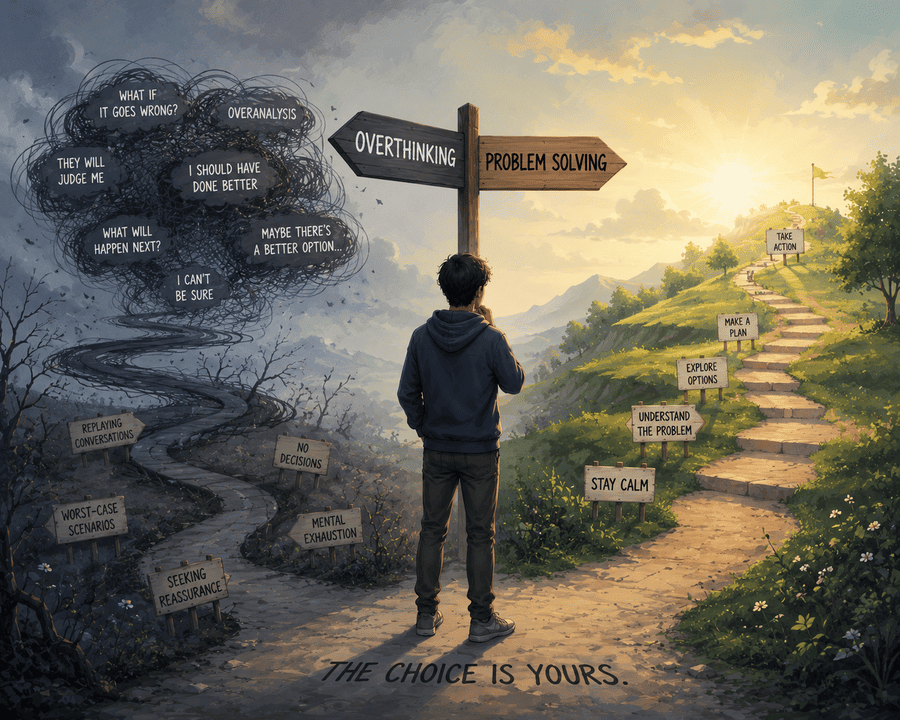
Overthinking vs Problem Solving: Know the difference
People often confuse overthinking with problem solving because both involve thinking deeply about a situation.
But they are not the same thing.
One helps you move forward.
The other keeps you mentally stuck.
Understanding the difference between the two can help you become more aware of when your mind is helping you — and when it is simply exhausting you.
What Does Problem Solving Look Like?
Problem solving is usually:
- practical
- goal-oriented
- calmer and more structured
- focused on finding solutions
It helps you ask:
- What can I do about this?
- What are my options?
- What step can I take next?
Problem solving may involve reflection and planning, but eventually it leads to action, clarity, or decision-making.
Even when the situation is stressful, problem solving creates movement.
What Does Overthinking Look Like?
Overthinking often feels repetitive and emotionally draining.
Instead of helping you move forward, your thoughts keep circling around the same fears, doubts, or possibilities.
You may:
- replay conversations repeatedly
- analyse every small detail
- imagine worst-case scenarios
- constantly seek reassurance
- struggle to make decisions
- think about the same problem without reaching a conclusion
Overthinking usually creates more confusion than clarity.
The mind keeps searching for certainty, but rarely feels satisfied with the answers it finds.
The Biggest Difference?
Problem solving seeks solutions.
Overthinking seeks certainty. (Refer: What triggers overthinking?)
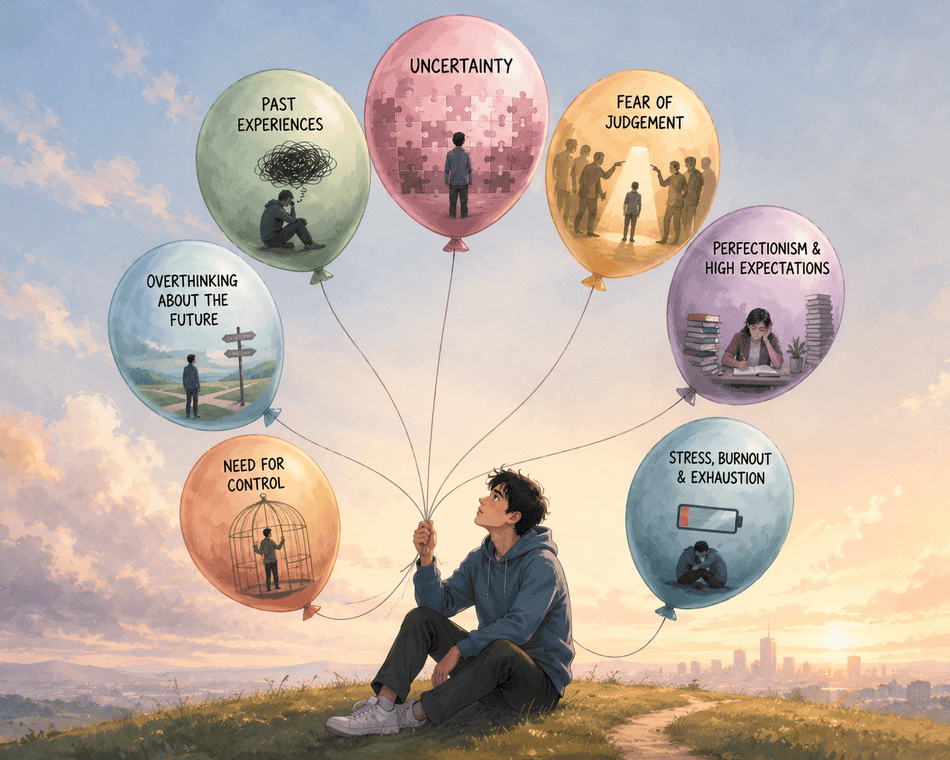
And certainty is something life cannot always provide. That is why overthinking often becomes endless.
Why Do We Overthink Instead of Problem Solve?
Sometimes overthinking develops because the brain is trying to protect you.
It may believe:
- If I think enough, I can prevent mistakes.
- If I prepare for every possibility, I won’t get hurt.
- If I analyse this more, I’ll finally feel sure.
But instead of feeling safer, the mind becomes more overwhelmed.
Stress, anxiety, perfectionism, fear of judgement, and past experiences can all make overthinking more likely.
And while thinking deeply is not a weakness, reflection and self-awareness can be valuable strengths. Sometimes, healing begins not by finding every answer, but by allowing yourself to step out of the spiral and breathe without carrying the weight of every thought.